
How smooth should it feel?
Step, bench, and shallow-end comfort matter. Ask about texture and what the finish feels like after startup.
Finish choice should match the pool, the backyard, the texture you want underfoot, and the amount of maintenance you expect after resurfacing.
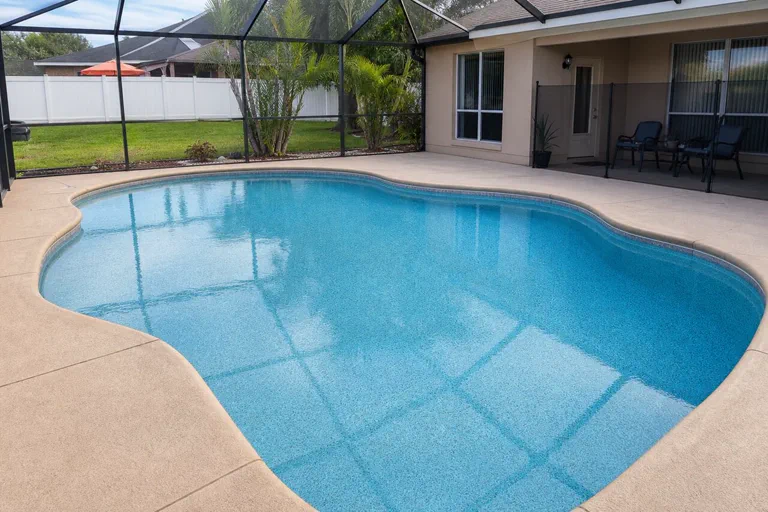
Pebble and quartz finishes are common upgrades when a homeowner wants more depth, color variation, or durability than basic plaster. They can make an older pool feel more current, but the choice should match how the pool is used.
A reliable pool surface conversation should begin with symptoms. Is the pool rough only on the steps, or does the whole shallow end feel etched? Do stains brush away and return, or have they become part of the finish? Are there chips around fittings, flaking patches, hollow-sounding areas, or rough waterline transitions? Those details help separate plaster repair, full resurfacing, finish selection, tile-line work, and separate leak or structural questions. The goal is not to rush a homeowner into the largest project. The goal is to understand the pool well enough that the next step is practical.
Brevard County pools live in a different rhythm than northern pools. They are open through long heat, heavy rain, screened patio shade, oak debris, sandy soil, coastal air, and frequent chemistry corrections after storms or heavy use. A pool in Palm Bay may have different access and staining patterns than a beachside pool in Satellite Beach, and an older Melbourne pool can have a different finish history than a newer Viera pool. That local context matters because resurfacing is not only a color decision; it is a condition, preparation, access, and startup decision.
Step, bench, and shallow-end comfort matter. Ask about texture and what the finish feels like after startup.
Screened patios and nearby trees change water color. A finish can feel different in a Brevard backyard.
Startup and water balance affect every finish. Ask what the first weeks look like.
Tile, drains, fittings, and coping transitions can make a new finish look complete.
Describe the surface symptoms and city, then mention approximate pool size, finish type if known, age, and surrounding concerns such as cracked tile, paver deck movement, or water loss. You do not need to diagnose the pool yourself.
This site avoids publishing unverified office, review, company-history, or promised response-time claims. Trust has to come from practical pool-surface planning, clear form expectations, and a calm explanation of what should be confirmed before scheduling. Before any work is performed, the actual service professional should confirm business identity, licensing, insurance, warranty terms, availability, exact scope, price, and startup requirements. That is the responsible way to handle a pool finish project that can affect the value and usability of the whole backyard.